May 21, 2026 Press Release
Robin Hood Invests $17.5 Million in Q2 Grants as New York’s Affordability Crisis Grinds On
Second quarter grantmaking brings Robin Hood’s year-to-date investments to more than $31 million
Early childhood investments advance foundations for lifelong opportunity, including early development, maternal and infant health, and access to quality child care, as the newly created Jackie Bezos Endowment for Early Childhood at Robin Hood positions the organization to sustain this work for generations
NEW YORK – As New York City’s affordability crisis pushes more families to the breaking point — driven by the rising cost of housing, food and child care — Robin Hood, the city’s largest poverty-fighting philanthropy, today announced $17.5 million in Q2 grants to nonprofits and direct-service organizations across five areas: early childhood, school-age learning, young adult opportunity, household and housing stability, and public policy. The investments, which bring Robin Hood’s 2026 total to more than $31 million, deepen Robin Hood’s work across each of those pressure points, with an expanded commitment to early childhood and child care now positioned for generational impact through the newly created Jackie Bezos Endowment for Early Childhood at Robin Hood.
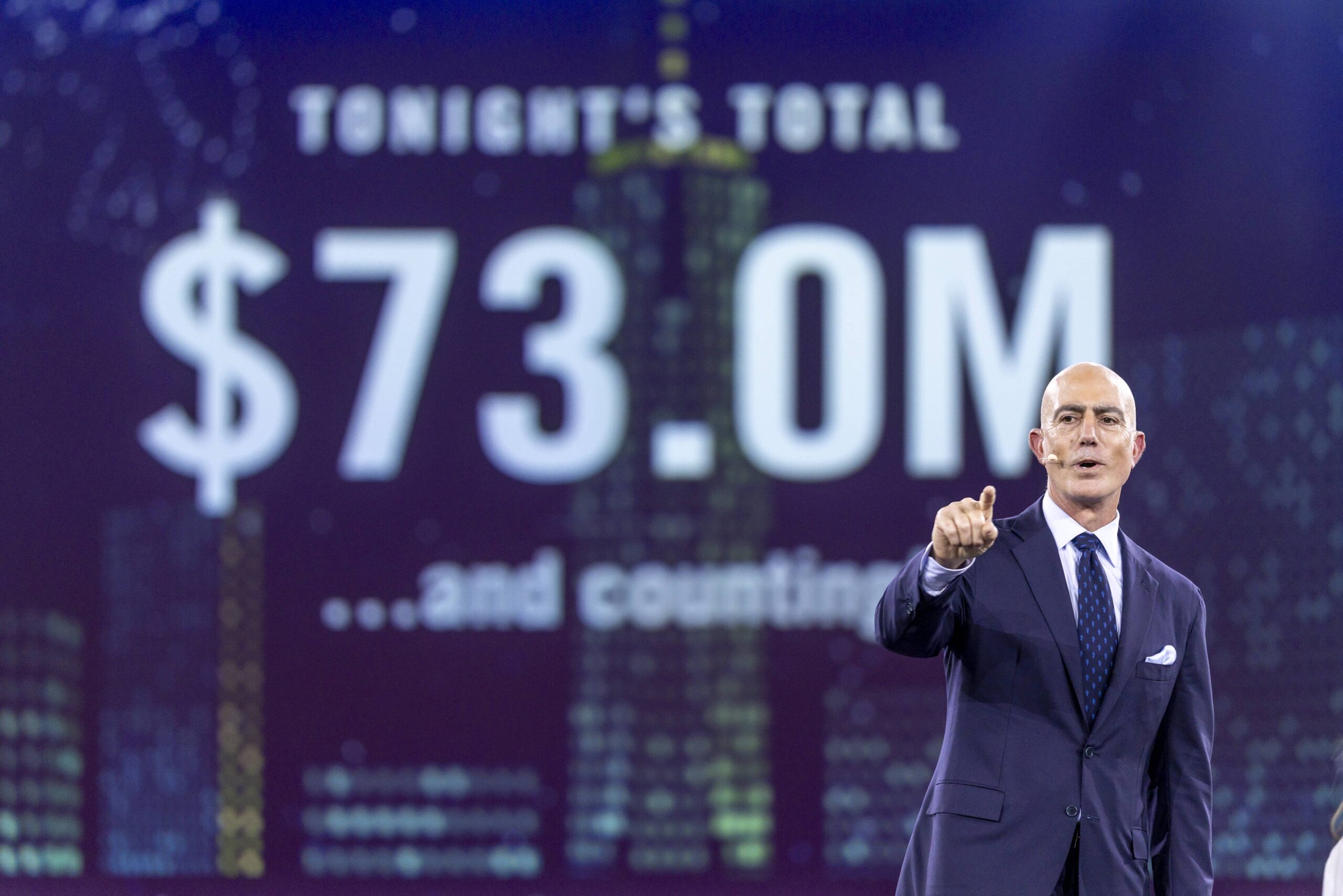
Today’s announcement follows Robin Hood’s 2026 Annual Benefit, which raised $73 million to fight poverty with urgency and staying power. This quarter’s docket reflects that enduring legacy: investing in proven partners, backing promising models, and strengthening the systems that help families move toward stability and opportunity.
“For too many New Yorkers, housing, groceries, and child care consume an outsized share of household income, and families’ overall expenses are rising faster than their incomes,” said Matt Klein, Chief Program and Impact Officer at Robin Hood. “Robin Hood’s investments address immediate challenges and help New Yorkers make progress toward greater economic security. Robin Hood exists to identify what works, fund it aggressively and move resources to the organizations producing results — now, and for the long term. This grant docket reflects that discipline.”
The Q2 2026 docket spans five portfolios:
- Early Childhood: supporting healthy births, strong parent-child bonds, early development and quality early learning opportunities for children under 5.
- School-Age Children: strengthening academic foundations, whole-child development, post-secondary pathways and the responsible use of technology to improve teaching and learning.
- Young Adults: helping New Yorkers ages 16 to 29 earn a college degree, get a career-track job, access mental health supports, and avoid involvement with the justice system.
- Adults and Household Supports (including Housing and Homelessness): connecting working-age adults to family-sustaining jobs, legal services, and public benefits, and creating housing stability through eviction prevention, voucher utilization, affordable housing development, and supportive services.
- Public Policy: advancing cross-sector research, advocacy, journalism, and financial infrastructure that help effective interventions reach scale and durability.
Early Childhood ($2,815,000)
Robin Hood’s early childhood grants this quarter deepen support for children and families during the earliest and most consequential years of life. The docket advances the three core pillars of Robin Hood’s early childhood strategy: early development, maternal and infant health and mental health, and early childhood education quality and access, while positioning Robin Hood to help ensure that New York City’s expansion of early care and education translates into meaningful developmental gains for low-income children.
The recent establishment of the Jackie Bezos Endowment for Early Childhood at Robin Hood – a $100 million gift from the Bezos family – strengthens that long-term commitment. The endowment is not tied to any single city initiative; it is designed to sustain the breadth of Robin Hood’s early childhood work into the future, backing the evidence-based programs and community partners that help young children and their caregivers build strong foundations for lifelong opportunity. New and renewed grants in Robin Hood’s Early Childhood portfolio this quarter include:
- $300,000 to Forestdale to bring trauma-informed early childhood mental health services and caregiver coaching to families with young children in high-need Queens communities, including through local early learning programs and family shelters.
- $750,000 to TEAM UP, jointly funded across the Early Childhood, School-Age Children and Young Adults portfolios, to integrate behavioral health services into pediatric clinics, allowing children and young adults to receive care in trusted primary-care settings without long referral delays.
- Renewed early childhood investments to continue proven maternal and infant health and mental health models, including support for BronxWorks, CAMBA and the Icahn School of Medicine at Mount Sinai, and sustained investment to All Our Kin and University Settlement to strengthen the quality of early learning environments as the city expands access to child care.
School-Age Children ($5,140,000)
Robin Hood’s School-Age Children grants sustain the academic, social-emotional, and post-secondary supports that help students graduate from high school ready for college and careers. The quarter’s investments connect early literacy, college access, educator pipelines, family stability, and the responsible use of technology, with an emphasis on models that can strengthen school and system capacity over time. Grants include:
- $600,000 to DREAM through the Robin Hood Learning + Technology Fund to design and codify AI-enabled instructional systems that strengthen literacy and computational thinking for students in grades 3-12, while keeping educators at the center of implementation.
- $100,000 to the Burning Glass Institute through the Robin Hood Learning + Technology Fund to build the evidence base for K-12 computing education by analyzing how computing skills connect to future high-wage careers and economic opportunity.
- Renewed investments in Promise Project, OneGoal, Sponsors for Educational Opportunity, CollegeBound Initiative and the City University of New York (CUNY) will support dyslexia screening and early literacy intervention, college access and persistence, and stronger teacher preparation grounded in the science of reading.
Young Adults ($2,085,000)
Robin Hood’s Young Adults portfolio is focused on what it takes for young New Yorkers to move into adulthood with stability, skills and opportunity. This quarter’s grants recognize that economic mobility requires more than a credential or first job: young people also need mental health supports, credible career pathways, and programs that help them navigate a changing labor market. This quarter’s grants include:
- $150,000 to the Center for an Urban Future to produce policy briefs on Workforce Pell and CUNY Beyond, two opportunities to strengthen public investment in short-term training, college-to-career pathways, and living-wage employment for CUNY students and graduates.
- $500,000 to Maimonides Medical Center to continue mental health services and essential supports for LGBTQIA+ young adults in southern Brooklyn, and $600,000 to Avenues for Justice to help justice-involved youth avoid incarceration and connect to employment.
- Renewed support for East Side House Settlement and Project Basta will help young adults earn high school equivalency credentials, access career opportunities and, in Basta’s case, explore AI-enabled tools that improve job matching for first-generation CUNY students.
Adults and Household Supports (including Housing and Homelessness) ($4,644,000)
Robin Hood’s Adults and Household Supports grants connect New Yorkers to the stabilizing supports that make mobility possible: good jobs, public benefits, legal protections, and stable housing. Across the workforce, legal services, and housing investments, the Q2 docket helps adults secure family-sustaining income, protect their households from displacement, and move from crisis toward lasting stability. This quarter’s grants include:
- $150,000 to Immigrant Justice Corps to launch the Community Response and Orientation Project, a pilot that trains fellows to become Department of Justice-accredited representatives and expands the pipeline of qualified immigration legal support in New York City.
- $175,000 to New York Legal Assistance Group to continue immigration and family law services for survivors of domestic violence, helping clients secure legal protections, work authorization, and greater household stability.
- Renewed support for Project Renewal, Cooper Union, Upwardly Global, and Fortune Society to help low-income New Yorkers, including immigrants and justice-impacted individuals, prepare for and secure jobs with stronger wages, benefits, and advancement opportunities.
This quarter’s housing investments sustain partners working across the full continuum of need: helping families use housing vouchers, preventing evictions, increasing affordable and supportive housing supply, and delivering high-quality services for New Yorkers experiencing or exiting homelessness.
- $900,000 to Anthos|Home, a Robin Hood-seeded nonprofit, to continue streamlining the voucher process and reducing the time New Yorkers spend in shelter. Since Robin Hood’s original 2022 investment, Anthos has housed more than 1,000 New Yorkers and maintained 100 percent housing stability.
- $350,000 to Brooklyn Legal Services to pair legal representation with tenant organizing, helping low-income renters avoid eviction and secure repairs that keep homes habitable.
- $200,000 to IMPACCT Brooklyn to advance its affordable and supportive housing development pipeline, alongside continued support for the Center for Urban Community Services and Coalition for the Homeless to provide psychiatric, medical, eviction prevention, and crisis services.
Public Policy ($2,675,000)
Robin Hood’s Public Policy grants strengthen the cross-sector partnerships needed to address New York City’s affordability crisis at scale. This quarter’s investments support independent journalism, housing and land-use research, immigration field stability, food access advocacy, racial equity tools, and higher education policy, all designed to help proven solutions last beyond a single grant cycle. This quarter’s investments include:
- $100,000 to New York Public Radio to support WNYC and Gothamist reporting on poverty and economic mobility, helping ensure that the experiences of low-income New Yorkers and the work of community partners remain central to the public conversation.
- $250,000 to the Regional Plan Association to advance housing and infrastructure research, including strategies tied to NYCHA repairs, affordable housing development, and equitable growth along the Interborough Express corridor.
- Renewed investments in the Center on Budget and Policy Priorities, Immigration Research Initiative, Institute on Race, Power and Political Economy, The Institute for College Access and Success, and West Side Campaign Against Hunger will sustain policy and advocacy work that protects core safety-net programs, strengthens immigrant economic inclusion, embeds racial equity into public decision-making, advances college affordability and student protections, and bolsters the city’s emergency food system.
About Robin Hood
We are NYC’s largest local poverty-fighting philanthropy and since 1988, we have invested $3 billion to elevate and fuel New Yorkers’ permanent escapes from poverty. In 2025, through $291 million in fundraising and $140 million in grants to 295 community partners, we created pathways to opportunity through strategic partnerships on child care, child poverty, jobs, living wages and more. We are scaling impact at a population level for the 2.2 million New Yorkers living in poverty. At Robin Hood, we believe your starting point in life should not define where you end up. To learn more about our work and impact, please visit robinhood.org and follow us on Instagram, LinkedIn, Facebook, YouTube, and X.
Media Contact
Kevin Thompson/Crystal Cooper, press@robinhood.org