December 2025
Spotlight on: Job loss and recovery among mothers during the COVID-19 pandemic
How pandemic-era parental job loss continues to impact working mothers
Contributors: Eunho Cha, Jeanne Brooks-Gunn, Kathryn Neckerman, and Jane Waldfogel
Issues Areas: Early Childhood
This spotlight report examines job loss and recovery among families with young children, with a specific focus on mothers, using data from the Early Childhood Poverty Tracker (ECPT), a representative, longitudinal study that surveyed parents in New York City between 2017 and 2023.
Working mothers faced significant challenges due to COVID-19. Many lost jobs in the early months of the pandemic as businesses closed or laid off or furloughed their workers. Others left work because child care arrangements were disrupted, with many child care centers closing and schools providing remote instruction to children in their homes.
We focused on these questions:
What share of working mothers stopped working after the COVID-19 outbreak, and did those figures differ by income, education, and other indicators of advantage and disadvantage?
How quickly did mothers return to work after the economy began to recover, and were there differences in employment by education and other indicators of advantage and disadvantage?
Key Findings
- 1 in 4 mothers who were working before the pandemic stopped working within about six months after the March 2020 shutdown.
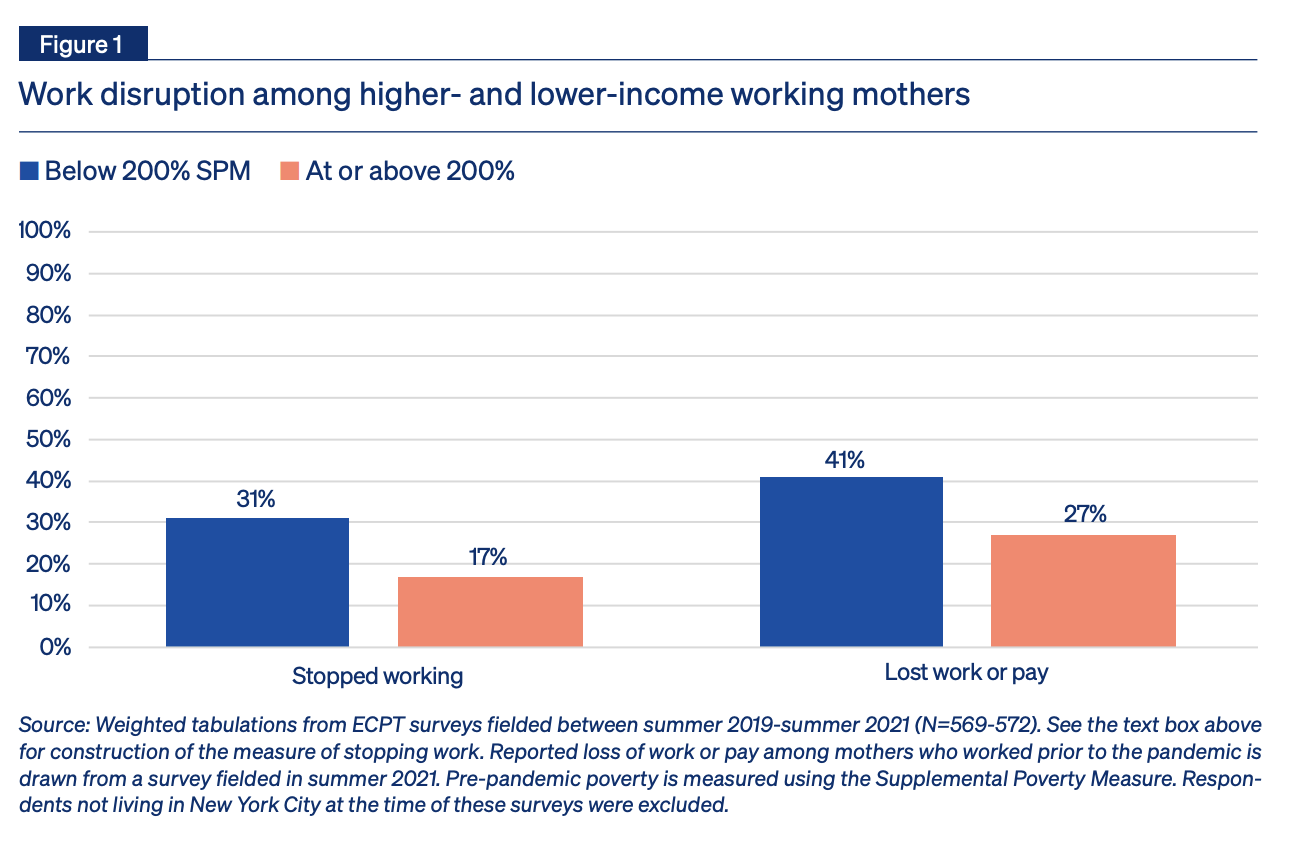
- Working mothers with incomes below 200% of the poverty line were almost twice as likely to stop working; mothers with less education were also more likely to stop working. Mothers who could work remotely were less likely to stop working, as were those who had access to paid sick leave and paid vacation time.
- By 2023, most mothers who had stopped working during this period had returned to work; however, disparities by education were apparent, with mothers holding a college degree being about 50% more likely to return to work than those without a college degree.
Conclusion and Key Takeaways
COVID-19 had a substantial impact on working mothers in New York City, with one in four mothers in the ECPT study stopping work after the March 2020 shutdown. Mothers living below 200% of the poverty line, as well as those without a college degree, were more likely to stop working; those who could do their job remotely or who had access to paid sick leave and vacation days were more likely to continue in their jobs. Of the mothers who stopped working after the COVID-19 outbreak, most resumed work by the time of our last survey in 2023. However, there was a disparity by education: 95% of college graduates but only 63% of mothers without a college degree were re-employed by that time.
While the pandemic-induced economic crisis is over, some economists caution that the pandemic could have longer-lasting implications for inequality at work.